FUE vs FUT Hair Transplants: Which is Right For You?February 11, 2026
Hair loss shakes confidence in ways most people don’t openly discuss. You notice an increasing amount of hair in the shower drain. You start to see thinning at the temples. You begin fiddling with your hairstyle to conceal bald spots. With time, these tiny changes start influencing the way you feel about yourself.
That is why now more people are considering the hair transplant treatment as a permanent fix. But before you start your research, there are two main options you’ll see right off the bat: FUE hair transplant and FUT hair transplant. That’s where the real process starts. Men and women looking into FUE vs FUT which is better have a tough time determining the actual differences.
In this guide we will explain, FUE vs FUT Hair Transplants: Which Is Right for You? You’ll learn how each technique works, who’s most likely to benefit from it, what recovery is like and how you can determine which will suit your lifestyle and meet your expectations.
Understanding The Basics of Hair Transplants:
With a hair transplant, healthy follicles are removed and relocated from one part of your scalp to where the hair is thinning or gone. Doctors typically take donor hair from the back or side of the head, since those areas are genetically resistant to hair loss.
These healthy follicles are then implanted in bald or thinning areas. Naturally, the transplanted hair grows via its phases or cycles as it would have in its previous location. You can wash it, trim it and style it like your natural hair.
Procedures differ in how doctors extract the hair follicles from the donor area. That one variation results in two methods: FUE and FUT.
What is a FUE hair transplant?
In an FUE, the hair transplant surgeon takes single hair follicles from the donor region with a small punch device. Then the follicles are implanted one by one. The doctor then implants those follicles into the thinning area.
The surgeon does not remove any skin in this technique. Rather, they remove follicles of the donor region in a random way. This approach removes the need for a long linear scar.
FUE is typically the pick among patients because it leaves very small dot-like scars that will be hard to see if you prefer short hair. The area of the donor is shaved by the surgeon before the surgery, decreasing the chances of dissecting out unwanted hair.
For those who want less visible scarring, and a faster recovery, FUE is a good option. This is the only way to go due to its convenience and younger people like it because of their active lifestyles.
What is a FUT hair transplant?
In a FUT hair transplant, the doctor extracts a narrow strip of scalp from the rear of your head. Then the doctor proceeds to sew up that space. The strip is then sectioned into individual grafts by the medical team under a microscope in preparation for implantation.
The thinning area, similar to that in FUE, is implanted with those grafts by the surgeon. Rather, the source of the grafts is what differs most.
With FUT there is almost always a single linear scar at the back of the head with most patients. If you wear your hair long, that scar remains concealed. But if you are shaving your head very short, you may notice it.
FUT is the choice of many surgeons when the patient requires a high number of grafts during one session. That approach enables doctors to harvest numerous follicles in an efficient manner.
Procedure Time and Surgical Process:
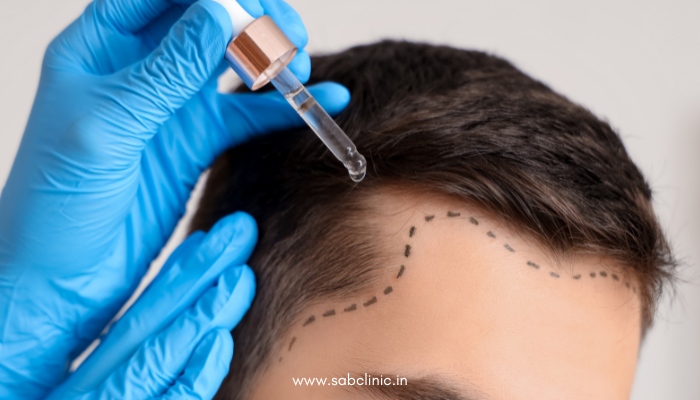
In a FUE hair transplant, since the surgeon removes follicles one by one, most of the time it will take longer to complete. This procedure can take a few hours depending on the number of grafts needed. The surgeon maintains accuracy while at work.
There is typically a little more speed with FUT, since the surgeon removes one strip at once. Then while the doctor closes up the donor area, the team makes grafts. The time for implantation is the same in both techniques.
Those patients who require a really large amount of coverage might fall into this group if they wish to reduce the number of sessions. That being said, a significant number of clinics do best hair transplants in Delhi now perform big FUE sessions too these days.
Scarring and Appearance:
FUE leaves little holes throughout the donor region. They go on to heal in the form of pinpoints which get lost among the hair that surrounds them. You wouldn’t see most of these unless you went totally shaved.
FUT creates a straight line scar where the doctor takes out the strip of hair. Then the wound is carefully closed by an experienced surgeon to minimise scar width. However, the line remains permanent.
If you are interested in going for very short haircuts or buzz cuts, then generally FUE is more suitable. If you plan to have medium-long hair, the strip might not concern you.
Recovery and Healing:
In a FUE hair transplant, the person sees small red dots in their donor area which heal after a few days. The small incisions are quick to heal, and most patients go back to normal activities within days. The scalp can be sensitive or feel tight at first.
FUT is stitched in the donor site. It is normal for patients to feel heaviness in the area for a few weeks. Doctors will remove the stitches after about 10 days. Patients may experience a slight numbness next to the scar during recovery.
Both methods require proper aftercare. You have to wash as directed. You may want to lay off strenuous exercise just for a week or two. The swelling and tiny scabs on the recipient site resolve over a period of time.
Hair Density and Results:
In the hands of an experienced surgeon, both methods result in a natural appearance.
In FUT, surgeons may be able to implant a few more grafts in one sitting. That advantage could be useful for people with more advanced hair loss who are looking to achieve a dense covering.
FUE offers flexibility. Surgeons can precisely focus on donor areas. And many who utilise precision combined with modern tools can achieve FUE even with excellent density.
Patients ask FUE vs FUT which is better and it is always considered that the results matter more in how a surgeon does than whether they do an FUE or a strip.
Cost Comparison and Budget Considerations:

The FUT hair transplant cost is typically less than FUE. Clinics frequently charge patients per graft and the cost is usually cheaper because FUT allows faster harvesting. On the other hand, when you look at the total budget outlay, FUT may be cheaper.
FUT hair transplant cost in India depends on the city, clinic standard, demand and number of grafts. Larger cities often charge more. But in many other countries, India is priced far more competitively.
FUE hair transplants are generally more expensive because they require additional time and attention. Clinics charge more because it’s a pain to do.
It is never appropriate for a patient to select any procedure based only on cost. A badly done transplant is a long-term problem that will be even more expensive to fix in the future.
Pain and Comfort:
Both procedures involve local anesthesia. You don’t experience acute pain during the surgery, but you are awake.
Following a FUE hair transplant, patients may experience some discomfort that generally subsides within days. Discomfort is generally relieved with over-the-counter pain medications.
FUT may induce a bit more tension in the donor area because of sutures. Nevertheless, it is well tolerated by most patients and they can be back to work in a week.
Your pain threshold and recovery pattern are also important factors. These are issues that you should definitely talk about with your surgeon.
Who Should Choose FUE?
You should choose FUE if:
- You like short haircuts.
- You want minimal visible scarring.
- You are active and looking for faster recovery.
- You are looking for smaller sessions or touch-up treatments.
In addition, FUE is appropriate for individuals who do not have sufficient scalp flexibility to remove a strip. Stretching of the scalp is examined before advising FUT by surgeons.
Who Should Choose FUT?

You may consider FUT if:.
- You intend to maintain longer hair concealing a fine straight-line scar.
- You’re looking for an option that’s a little easier on the wallet.
- You also have strong donor density in the back of the head.
For some patients, they select FUT initially and subsequently get FUE for further tweaking.
Long Term Maintenance:
A transplant does not prevent subsequent hair loss in untreated areas. As you must be able to support what natural hair remains. Doctors might recommend medicines or lifestyle changes to guard already-existing follicles.
You have to realise that transplanted hair grows for life because it comes from resistant areas. But the surrounding hair can still thin if you don’t help stop its progression.
Long-term strategic planning is more important than FUE vs FUT Hair Transplants: Which Is Right for You? alone.
Making The Final Decision:
Aside from that, as a patient wondering about the FUE vs FUT Hair Transplants: Which Is Right for You? Focus on three things: your hair loss pattern, your lifestyle and lastly, what your expectations are.
You need to consult a doctor. A good surgeon looks at your donor area, determines the scalp laxity and guesses how many grafts you will need.
Do not rush the decision. Ask about the surgeon’s experience. Request to see before-and-after cases. Understand recovery timelines clearly. Remember: The right process is the one that caters to you. No single method fits everyone.